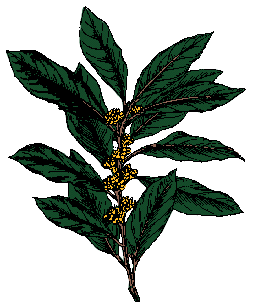
: an evergreen shrub or tree (Laurus nobilis of the family Lauraceae, the laurel family) of southern Europe with small yellow flowers, fruits that are ovoid blackish berries, and evergreen foliage once used by the ancient Greeks to crown victors in the Pythian games
Noun
They enjoyed the laurels of their military victory.
The player earned his laurels from years of hard work.
Recent Examples on the Web
Examples are automatically compiled from online sources to
show current usage.Read More
Opinions expressed in the examples do not represent those of Merriam-Webster or its editors.
Send us feedback.
Noun
Broadway's glittering lights have always beckoned aspiring thespians and avid theatergoers to New York, and the city's ever exciting theatre scene is far from simply resting on its laurels.—
Madison Flager,
Condé Nast Traveler,
16 July 2026 Such ability to adapt to a game means that England can’t afford to rest on their laurels.—
Jack Pitt-Brooke,
New York Times,
11 July 2026 As satisfying as that experience was, West didn’t rest on his laurels when brought back to the show decades later.—
Tribune News Service,
San Diego Union-Tribune,
3 July 2026 Not a hotel to rest on its laurels, however, the ever-evolving offering at the Ciragan Palace ensures that repeat guests—and there are plenty of them—always have something new to discover.—
Liam Hess,
Vogue,
1 July 2026 See All Example Sentences for laurel
Word History
Etymology
Noun
Middle English lorel, in part from Medieval Latin laureola spurge laurel (from Latin, laurel sprig), in part modification of Anglo-French lorer, from Old French lor laurel, from Latin laurus
: an evergreen shrub or tree of southern Europe related to the sassafras and cinnamon with shiny pointed leaves used by the ancient Greeks to crown victors in various contests
2
: a tree or shrub (as a mountain laurel) that resembles the true laurel


 Copy Citation