8 Soccer Words Just for Kicks
Are you ready for some (association) football?
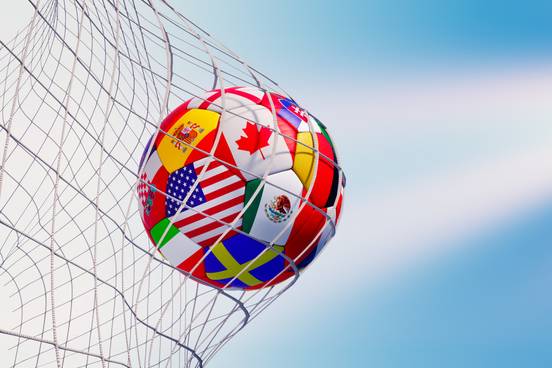
Definition: a game played on a field between two teams of 11 players each with the object to propel a round ball into the opponent’s goal by kicking or by hitting it with any part of the body except the hands and arms
Americans’ word for what the British call football actually comes from British slang. What is now known as soccer was originally given the name association football to distinguish it from other kinds of football, such as rugby. Soccer clips out the second syllable of association and tacks on the –er suffix found in other British academic slang, changing the pronunciation of the doubled c from an \s\ to a \k\ sound.
For decades, soccer’s place in American life was marginal and subcultural. … Things have changed. Today, soccer … is an ambient everyday presence in American life—on our digital devices, on the street, and, quite literally, in the air, flashing on the skyline of the nation'’s biggest city. The day before the Empire State Building lit up, CBS Sports drew record viewership—the largest audience for a club soccer match in U.S. English-language TV history …
—Jody Rosen, The New York Times, 15 June 2026
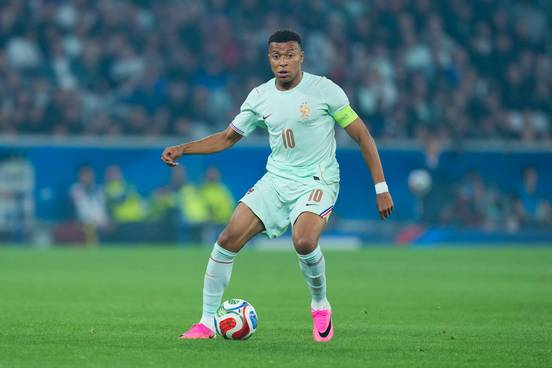
Definition: a forward in soccer
Many team sports employ forwards, players who play at the front of the team’s formation near the opponent’s goal. Striker is soccer’s own special name for such a player.
A nation brimming with world-class athletes across the entire spectrum of sports has struggled to consistently produce soccer scorers, particularly the elite strikers who generate goals, excitement and wins.
—
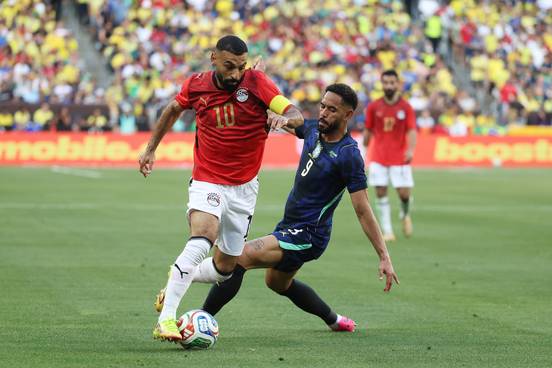
Definition: a player (as in soccer or ice hockey) in a wing position
In soccer, as in other team sports, wing refers to one of the offensive positions or players on either side of a center position, and accordingly winger may also be used for such a player. The word wing, first used for an animal appendage, traces back to the Middle English winge and is of Scandinavian origin, sharing an ancestor with the Sanskrit word vāti, meaning “it blows.”
Electric Ben Gannon-Doak heralds return to Scotland’s tradition of tricky wingers
—
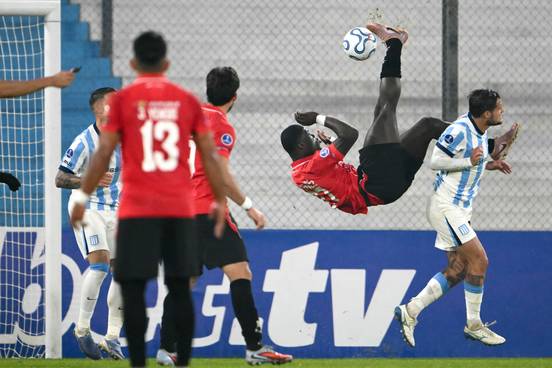
Definition: a kick in soccer that is executed by somersaulting backwards and moving the legs in a pedaling motion in order to strike the ball in midair
The first known use of bicycle kick appeared in a Pennsylvania newspaper in 1930, though the move has gone by other names in other languages.
... Paquetá almost scored the goal of the week with a bicycle kick.
—... popular tradition has it that [Ramón] Unzaga invented this move in 1914 in Talcahuano. A naturalised Chilean—he had emigrated from Bilbao with his parents in 1906—Unzaga loved launching bicycle kicks both in attack and defence. After he showed off his trademark move in two Copa Americas (1916 and 1920), the Argentinean press dubbed the bicycle kick la chileña.
—
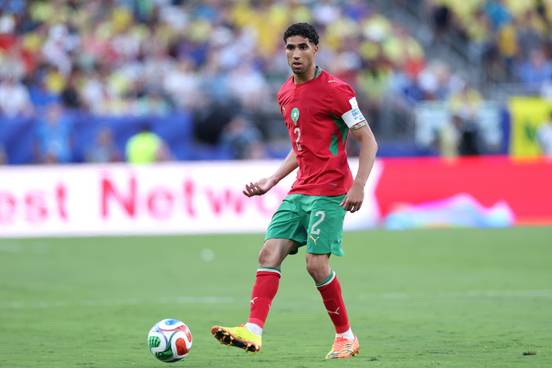
Definition: a primarily defensive player usually stationed nearest the defended goal (as in soccer or field hockey)
The word fullback was first used for a defensive rugby player, before being applied to positions in other team sports. When two teams are lined up against each other on the field, fullbacks are positioned behind, or to the back of, the forwards.
Look for him [Timothy Weah] to ... boast versatility as either a fullback or a winger. An adept tackler who can help win the ball back …
—
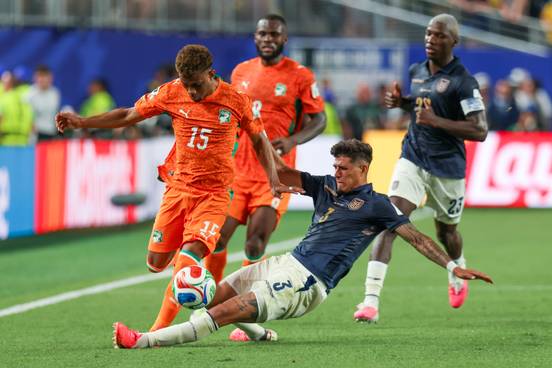
Noun Definition: the act or an instance of tackling
Verb Definition: to seize and throw down or stop (an opposing player with the ball) in football
The same relevant definition of the verb tackle covers actions performed in both soccer and American football, though they are different. To tackle someone in American football is usually to seize and throw them down, or stop them by hindering their movement in some way. In soccer, to tackle an opposing player with the ball is to stop them by stealing the ball away from them, without making physical contact.
... Jamal Musiala was at his best, scoring a goal early in the second half, creating a pair of chances, winning nine of 14 ground duels, drawing a pair of fouls and even completing three tackles …
—Back on the pitch, a Paraguay defender was issued a yellow card for a late tackle.
—
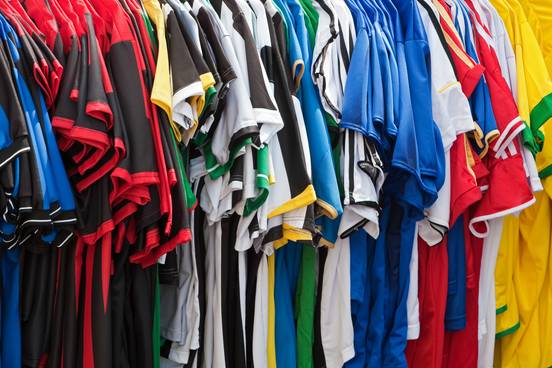
Definition: an often loose-fitting shirt that is worn by a member of a sports team as part of a team uniform and that typically has the athlete's name and number on the back
The Jersey breed of cattle, the knit fabric called jersey, and the types of upper-body garments called jerseys—including soccer and other sports jerseys—all owe their names to Jersey, the name of an island in the English Channel with an area of 45 square miles.
FIFA has dropped an exclusive Toronto host city jersey ahead of the opening match of the World Cup, and it costs almost as much as a ticket to see a game.
—
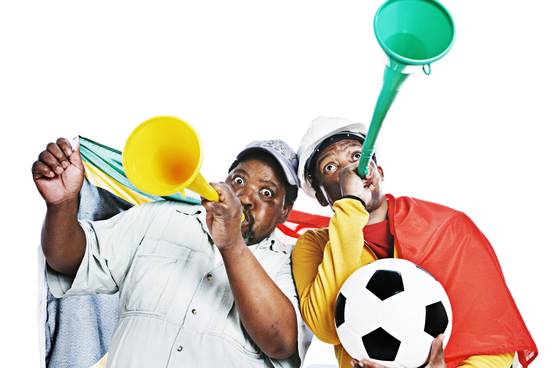
Definition: a simple plastic noisemaker in the form of a straight trumpet usually between 2 and 3 feet in length that produces a single note and is used principally at sporting events
In 2010, when South Africa hosted the World Cup, vuvuzela seemed to be on everyone’s lips, and it was reported to be a trademarked term for the plastic horn. However, according to the newsletter of a South African intellectual property firm, while a number of individuals applied, beginning in 2003, for the legal rights to vuvuzela, apparently none of these applications were accepted. The history of the word prior to the trademark claims is obscure. The hypothesis that the word has been borrowed from Zulu has not been substantiated. Words similar in form, such as vumvuzela, a form of vumvuza (“to scatter or sprinkle”) have no evident semantic relation.
World Cup-goers took a page from Eagles fans, setting up sprawling tailgates throughout the stadium parking lots, with flags staking out their territory. Car horns blared. Vuvuzelas buzzed. Fans decked out in colorful costumes roamed the streets, stopping to pose for selfies with strangers.
—