The Words of the Week - Apr. 10
Dictionary lookups from politics, literature, and the line between darkness and light
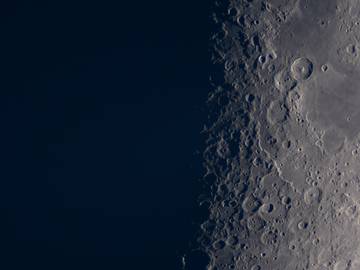
Lookups for crater were high in relation to the Artemis II mission.
As the astronauts of Artemis II traveled farther from Earth than any humans before them, they paused. Speaking solemnly, they called down to mission control to request that an unnamed crater on the moon be dedicated to Carroll Wiseman, the wife of mission commander Reid Wiseman. She was 46 when she died of cancer in 2020.
—Katrina Miller, The Virginian-Pilot (Norfolk, Virginia), 8 Apr. 2026
We define the relevant sense of crater as “a depression formed by an impact (as of a meteorite).” Crater has several other senses as well, including “the bowl-shaped depression around the orifice of a volcano,” “a dimple in a painted surface” and, capitalized Crater, “a constellation that is visible between the constellations of Corvus and Hydra and that is represented by the figure of a cup.” The word can be traced back through Latin to the Greek krātḗr, “mixing bowl, bowl-shaped depression around the mouth of a volcano.”
News from the Artemis II mission also led to a rise in lookups for terminator.
When the Artemis II astronauts reach the far side of the Moon on Monday their world will fall silent as communications with Earth are blocked by the bulk of our nearest neighbour. … Some of the Moon will be in darkness when the astronauts fly over, with the illuminated and shaded divided by a line known as “the terminator.”
—
We define the relevant sense of terminator as “the dividing line between the illuminated and the unilluminated part of the moon’s or a planet’s disk.” On Earth (as on the Moon), the terminator is constantly moving, so don’t worry when it passes over you—it’ll be back.
Humility was a top lookup this week, thanks to astronaut Christina Koch aboard the Artemis II spacecraft.
The question, prompted by the folks at Merriam-Webster and channeled through NASA, was: “You’ve already surpassed more than 250,000 miles from Earth—farther than any human has gone before. So, what are some words that come to mind when you try to wrap your mind around this very unique experience?” The astronauts passed the microphone around a bit before Koch took charge. Here’s what she had to say:
“I’ll be honest with you, the main word, because superlatives just don't do it justice, is humility. We would never be here if it weren’t for so many people that came before us, starting with Neil Armstrong, Katherine Johnson, Dorothy Vaughan, civil rights movement leaders. Everyone who worked on this spacecraft before we got here in our three years of training. … They all passed the record. We definitely didn’t pass the record up here alone.”
—
We define humility as “freedom from pride or arrogance : the quality or state of being humble.” Both humility and humble have their origin in the Latin word humilis, meaning “low, humble,” which in turn comes from humus, meaning “earth.”
The use of expletives by Donald Trump and subsequent reporting using the word expletive led to expletive being a top lookup for the week.
Donald Trump issued an expletive-laden warning on Sunday that Tehran had until Tuesday night to reopen the strait of Hormuz or the US would obliterate Iran’s power plants and bridges.
—
We define the relevant sense of expletive as “an exclamatory word or phrase; especially : one that is obscene or profane.” In prosody, expletive can also refer to a syllable, word, or phrase inserted to fill a vacancy (as in a sentence or a metrical line) without adding to the meaning.
Speculation about the president’s health, partly in connection with his social media use, led to a rise in lookups for dementia.
Dr [Vin] Gupta wrote on X: “Erratic. Can’t finish sentences. Often confused. Illogical train of thought. Word finding difficulties. Developing and worsening gradually over time. The president is exhibiting all the signs of dementia.” The post comes after Trump’s health sparked concern yet again, with a worrying post to Truth Social laden with expletives and saying “praise be to Allah.”
—… [Alex] Jones compared Trump’s current state to his grandfather’s decline due to dementia …
—
Dementia refers to a usually progressive condition (such as Alzheimer’s disease) marked by the development of multiple cognitive deficits (such as memory impairment, aphasia, and the inability to plan and initiate complex behavior). It was first used in English in the early 1800s, and is a borrowing of the Latin dēmentia, meaning “derangement, insanity, folly.”
Another social media post by the president, this one on Tuesday morning, prompted a spike in lookups for genocide.
Trump’s assertion that Iranian “civilization will die” could cross a rhetorical line from threats of war crimes to threats of genocide, as defined by the United Nations Convention on the Prevention and Punishment of the Crime of Genocide.
—
We define genocide as “the deliberate and systematic destruction of a racial, political, or cultural group.”
Lookups for the verb whipsaw were high on Wednesday morning.
Even as They Praise Iran Cease-Fire, World Leaders are Whipsawed by Trump
—
We define the relevant sense of whipsaw as “to afflict (someone or something) in opposite or conflicting ways.” A whipsaw is a type of hand-powered saw worked by two people, one of whom stands on or above the log being sawed and the other below it, usually in a pit. The tool dates back to the 15th century, but it was not until the 19th century that anyone thought to use the saw’s name figuratively to apply to situations in which someone or something is doubly “cut,” or hurt.
Mollitude was too rarely used to make it into the third edition of our Unabridged dictionary (1961), but in the second edition (1934) it is labeled as a “rare” word meaning “softness.” Its rarity notwithstanding, mollitude (which shares the same Latin ancestor as the more familiar English words mollify and emollient) does show up from time to time. Notably, Vladimir Nabokov appears to have been quite fond of the archaism. In his 1969 novel Ada, Nabokov used mollitude to refer to a figurative softness.
Van remembered that Mr. Alexander Screepatch, the new president of the United Americas, a plethoric Russian, had flown over to see King Victor; and he correctly concluded that both were now sunk in mollitude.
—
As a translator of Aleksandr Pushkin’s Eugene Onegin, Nabokov used mollitude for a particular Russian word, an unusual choice often noted by scholars, and explained by Nabokov himself.
… Nabokov’s desire to record within the translation Gallic overtones as well as the primary Russian tone can distort his literalism by turning a plain Russian word into an English freak. He repeatedly translates nega (“pure comfort” grading into “sweet bliss”), a favorite among Russian Romantic poets, short and easily rhymed, into the archaic “mollitude.”
—In an attempt to explain what néga is, Nabokov claims that it ranges from “mollitude,” a sort of “soft luxuriousness” and “dulcitude” to various kinds of “amorous pensiveness, douce paresse, and sensual tenderness to outright voluptuousness” (Fr. volupté). In both this note and an earlier one, Nabokov highlights the connection between Pushkin’s poetic language and French literature.
—
If you choose, you too can be like Vladimir Nabokov (imagine!) and turn heads by bringing mollitude further into common parlance when context or circumstances call for a certain gentle mollitude.