The Words of the Week - Feb. 20
Dictionary lookups from the Winter Olympics, Islam, and the Sierra Nevadas
The death of Civil Rights icon Jesse Jackson led to a rise in lookups for the noun somebody, as Jackson used the word prominently.
Trahern Crews, who helped found the Black Lives Matter-Minnesota chapter, said he grew up with Jackson’s “I am Somebody” recitations ringing in his ears. Jackson often led crowds in a call-and-answer chant that usually included variations on “I may be poor … but I am … Somebody. I may be young … but I am … Somebody.” “That allowed future generations to stand up and follow in his footsteps and declare Black Lives Matter and recognize our humanity,” Crews said.
—Trevor Hughes, USA Today, 17 Feb. 2026
When used as a pronoun, somebody refers to a person of unspecified or indefinite identity, but when used as a noun, as by the late Rev. Jesse Jackson, it refers to a person of position or importance.
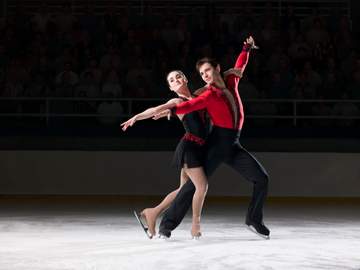
The Winter Olympics in Milan continued to drive lookups for sports-related words, including the figure-skating term salchow.
And as other teams struggled with their salchows, Miura and Kihara’s were clean, with their throw triple loop putting an exclamation mark on the program.
—
Salchow refers to a figure-skating jump with a takeoff from the back inside edge of one skate followed by one or more full turns in the air and a landing on the back outside edge of the opposite skate. Ulrich Salchow (1877-1949), the namesake of his signature move, earned the first-ever Olympic medal in men’s figure skating as part of the 1908 games in London. If something about that date strikes you as odd, nice catch. Figure skating was then part of the Summer Games; the Winter Olympics as we know them today didn’t begin until 1924.
Tuesday evening marked the start of Ramadan, causing more people than usual to look up the word Ramadan.
A saying familiar to many Muslims around the globe is, ‘Ramadan Mubarak’ which simply means ‘Blessed Ramadan.’ Another commonly used term is, ‘Ramadan Kareem,’ which translates to ‘Generous Ramadan,’ both terms are from Arabic origins. ... ‘Ramzan’ is another variation often used around the globe too, mainly around countries such as India and Pakistan.
—
Ramadan, from the Arabic Ramaḍān, refers to the ninth month of the Islamic year observed as sacred with fasting practiced daily from dawn to sunset. Observing the daily fast for Ramadan comprises one of the Five Pillars of Islam. In addition to fasting, the month is a period of introspection, communal prayer in the mosque, and reading of the Quran.
A deadly avalanche near Lake Tahoe, California, led to a rise in lookups for the word avalanche.
Rescuers faced daunting conditions on Wednesday as they raced against time and diminishing survival odds to find nine backcountry skiers still missing after an avalanche near Lake Tahoe. Six others from their group were able to use emergency equipment to contact rescuers on Tuesday afternoon, but they could not be reached until shortly before midnight because of continuing snowfall.
—
We define the relevant sense of avalanche as “a large mass of snow, ice, earth, rock, or other material in swift motion down a mountainside or over a precipice.” The word comes from French (same meaning), and in turn from the Franco-Provençal dialect lavantse, avalantse.
The rarely encountered word quodlibet became a top lookup this week after it surfaced in a tranche of documents related to Jeffrey Epstein that was reported on by TMZ.
Ghislaine [Maxwell] responds with, “Stop it. My jealous quodlibet (look it up in the dictionary if you have not used this word before) is already full”.
—
We define quodlibet as “a philosophical or theological point proposed for disputation” as well as a disputation on such a point. Quodlibet can also refer to a whimsical combination of familiar melodies or texts. The word traces back to the Latin quodlibet, neuter form of quilibet, “any whatever,” from qui “who, what” + libet “it pleases.” As the TMZ article notes, it is unclear how Maxwell was using the word.
If you didn’t know that there’s a word for the whitish marks at the base of your fingernails, well, now you do! Lunule may refer to any crescent-shaped body part or marking, including those at the base of your nails. The word is a borrowing of the New Latin lūnula, which goes back to Latin lūnula, meaning “crescent-shaped ornament," which in turn is the diminutive of lūna, “moon.”
As someone who teaches nature writing, I can tell you when I set my students to a writing task, I ask them, in so many words, to start with and from a place of love, for the body of water, the animal, the forest, the flower—whatever it is they are writing about. ... Knock us back to that time you first smelled a dried sand dollar when you were 9. Let us feel the bits of sand tap out of the lunules and into the palm of your hand.
—