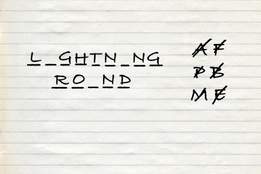
The Words of the Week - Mar. 20
Dictionary lookups from war, memorials, and the night sky

The Oscars’ tribute to actors and other film professionals who died in 2025 led to a rise in lookups for in memoriam on Sunday night.
After his speech, the camera lifted to show a line of [Rob] Reiner’s contemporaries and film comrades, including Crystal’s “When Harry Met Sally” co-star Meg Ryan, hand in hand. The tribute preceded the Awards Show’s signature In Memoriam segment, which also honored Hollywood legends Robert Redford, Catherine O'Hara and Diane Keaton.
—Anna Kaufman, USA Today, 16 Mar. 2026
We define the preposition in memoriam as “in memory of,” which is a direct translation of its Latin antecedent. In memoriam is used especially in epitaphs. Since the days of the Roman empire, in memoriam, followed by a name, has been found on monuments and gravestones.
March 15, aka the ides of March, was this past Sunday, leading to a rise in lookups for the word.
Ever since a soothsayer’s warning in Act 1, Scene 2 of William Shakespeare’s “Julius Caesar” (written around 1600), “Beware the Ides of March” is a phrase associated with danger. The phrase simply refers to a date, March 15, but was delivered to Caesar as a portent of calamity, in his case a mortal one.
—
Ides refers to the 15th day of March, May, July, or October or the 13th day of any other month in the ancient Roman calendar. The Roman calendar was a lunar one, and the dates weren’t based around the concept of a week, but instead around the phases of the moon. It’s also important to note the Romans didn’t number the days of the months sequentially; their day planners (if they existed) were based around three key moments: kalends (the first of the month), nones (the ninth day before the ides), and ides (the aforementioned 13th or 15th). We get the word calendar from the Latin kalends.
Here’s how this system worked in practice, using March as an example. What we call March 1 was the kalends of March. March 2 through March 6 were called “X days before the nones of March,” March 7 translated to the “nones of March,” March 8 through March 14 were “X days before the ides of March,” and March 15 was the “ides of March.” The 16th through the last day of the month were “X days before the kalends of April.”
A bolt from the blue on Tuesday morning led Ohioans, and many others, to look up bolide, among other meteor-related words.
Did any of you see or hear the massive meteor that streaked through the skies over Ohio and Pennsylvania Tuesday morning? … NASA says the six-foot space rock was traveling 40,000 miles per hour when it entered Earth’s atmosphere over Lake Erie. … Scientists call it a bolide, which is a meteor that explodes midair.
—
We define bolide as “a large meteor” and especially “one that explodes.” The word traces back via French and Latin to the Greek bolid-, bolís, “hunting javelin, bolt (of lightning), throw of dice.” We define the relevant sense of meteor as “any of the small particles of matter in the solar system that are directly observable only by their incandescence from frictional heating on entry into the atmosphere.” If such a meteor reaches the surface of the earth without completely burning up, it is thereafter called a meteorite. Meteoroid refers to such an object while it is floating out in space without relation to the phenomena it produces when entering the earth’s atmosphere.
The word quagmire has been much in the news this week, and consequently it has spiked in lookups.
Donald Trump is being warned that Iran may drag America into a “quagmire” where it will lose the war even if US forces win every battle.
—Iran Is Already a Quagmire
—
We define a figurative sense of quagmire as a synonym of predicament meaning “a difficult, precarious, or entrapping position.” Used literally, it refers to soft miry land that shakes or yields under the foot. Quagmire, which has been in use since the 16th century, is a combination of the word mire (“wet spongy earth (as of a bog or marsh)”) and quag, a synonym of “bog” and “marsh.” While mire has been traced back to the Old Norse word mȳrr, the origins of quag are unknown.
If you find yourself jumping with joy at spring’s arrival, it would be no stretch to describe yourself with the word saltatorial, which means “relating to, marked by, or adapted for leaping.” The word comes from the Latin word saltatorius combined with the English suffix -al.
The New Mexico jumping mouse is a member of the Zapodidae family of rodents. Jumping mice have powerful back legs and long tails, allowing them to perform a huge saltatorial—or jumping—motion.
—