The Words of the Week - Mar. 27
Dictionary lookups from social media, geology, and the equinox
A major court ruling involving social media giants led to a rise in lookups for the word negligent.
Meta and YouTube Found Negligent in Landmark Social Media Addiction Case
—(headline), The New York Times, 25 Mar. 2026
We define negligent in our Dictionary of Law as “marked by, given to, or produced by negligence,” and negligence as “failure to exercise the degree of care expected of a person of ordinary prudence in like circumstances in protecting others from a foreseeable and unreasonable risk of harm in a particular situation.” The word negligent can be traced back to a form of the Latin verb neglegere, meaning “to disregard, do nothing about, fail to care for.”
Drought conditions in the west have led to increased lookups for the noun snowpack.
According to the USDA Natural Resources Conservation Service, Montana’s mountain snowpack is below normal levels, with basins reporting 60% to 95% of the median snow water equivalent.
—“It’s way too early to be having 80-degree weather and of course, the snowpack is a concern,” Utah Gov. Spencer Cox said last week during his monthly news conference.
—
We define snowpack as “a seasonal accumulation of slow-melting packed snow.” The word first appeared in print in the mid-20th century.
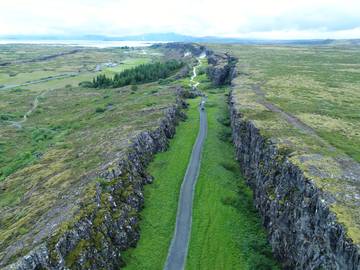
A groundbreaking (cough) geological study was responsible for greater-than-usual lookups for plate tectonics.
Now, scientists say they have found the earliest direct evidence of plate tectonics on Earth—the only known planet to have the geological process. The findings suggest that the phenomenon was already shaping the planet billions of years ago.
—
Plate tectonics is a theory in geology that the lithosphere of the earth is divided into a small number of plates which float on and travel independently over the mantle; much of the earth’s seismic activity occurs at the boundaries of these plates. In the quote above plate tectonics is used to mean “the process and dynamics of tectonic plate movement.”
Lookups for the adjective vernal have sprouted in abundance now that spring has sprung.
During the equinox, the sun travels south to north across the celestial equator. Other names for the spring equinox include the March equinox and the vernal equinox.
—
We define the relative sense of vernal as “of, relating to, or occurring in the spring.” While the sun has been crossing the equator since time immemorial, producing a vernal equinox in the northern hemisphere in late March and in the southern hemisphere in late September, the word vernal has only been in use in English since the early 16th century, when it blossomed from the Latin adjective vernālis. That word in turn traces back to the noun vēr, meaning “spring.”
Scious is a rarely encountered adjective defined in the second edition of our Unabridged dictionary as “knowing; having knowledge.” It is so rare, in fact, that you’d be hard pressed to find an example of its use other than that by Samuel Taylor Coleridge, who wrote in his “Essay on Faith”: “Brutes may be, and are scious …” Nevertheless, scious may be worth knowing if for no other reason than to become just a little more, well, scious.