16 Glee-ridden Words from Schitt's Creek
Don’t watch without reading this, you little frippets!

Schitt’s Creek is a Canadian television sitcom about the Roses, a rich family that loses its wealth and must temporarily move into a motel in a small town with the cheeky name of Schitt’s Creek. The show aired for six seasons from 2015 to 2020. By metrics of awards and international viewership, Schitt’s Creek became Canada’s most successful television series. Among the series’ memorable characters is Moira Rose, played by the late Catherine O’Hara, whose diction is, shall we say, a bit eccentric. We’ve collected but a few choice nuggets from Moira’s lexicon here, with a bit of backstory on each, and examples of their usage outside of the show.

Definition: quibbling over things of little substance, value, or importance
In Moira's words: “Now is not the time for pettifogging!”
In its earliest English uses, pettifogger was two separate words: pettie and fogger. Pettie was a variant spelling of petty, a reasonable thing to call someone who is disreputable and small-minded. But why fogger? It may come from Fugger, the name of a successful family of 15th- and 16th-century German merchants and financiers. Germanic variations of fugger were used for the wealthy and avaricious, as well as for hucksters. In English, pettie fogger originally referred to a small-time operator of a shady business, and later specifically to a lawyer, before its use expanded to cover anyone given to quibbling over petty trifles. Pettifogging, which arose in English not long after pettifogger, refers to the characteristic action of a pettifogger.
“But I don’t think he’s pettifogging; not Mr. Grey. Four hundred pounds down, with fifty pounds for dress, and the same or most the same to all the girls, isn’t pettifogging.”
— Anthony Trollope, All the Year Round: A Weekly Journal, 25 Nov. 1882
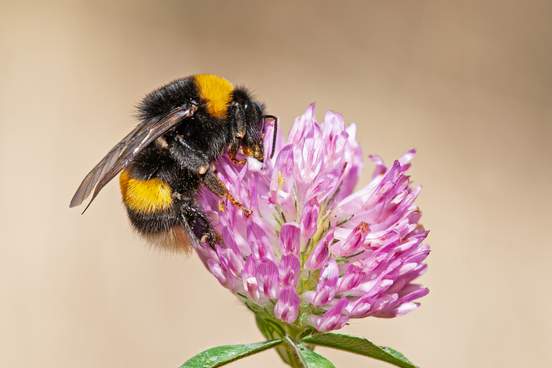
Definition: to buzz or drone
In Moira’s words: “The room is suddenly bombilating with anticipation.”
The noun bombilation refers to a buzzing or droning sound. It would stand to reason then, that the verb bombilate means “to buzz or drone.” And it does! But written evidence of bombilate/bombilated/bombilating is very rare outside of references to Schitt’s Creek, and thus it is not as yet covered in our pages. If it ever is, we will surely note that bombilate, like bombilation, traces back to the Latin verb bombilāre, meaning “to buzz or hum.”
And we ran down the garden, with the snowballs in our arms, towards the house; and smoke, indeed, was pouring out of the dining-room, and the gong was bombilating, and Mrs Prothero was announcing ruin like a town crier in Pompeii.
— Dylan Thomas, Selected Writings, 1970

Definition: one skilled in sleight of hand
In Moira’s words: “The fact that my own world was ripped out from under me, by someone like this prick of a prestidigitator?”
The secret to performing magic tricks is all in the hands—or at least, that’s what is suggested by the etymology of prestidigitation (meaning “sleight of hand”) and prestidigitator, which refers to a magician, aka one who performs prestidigitation. The French word preste (from Italian presto) means “quick” or “nimble,” and the Latin word digitus means finger. Put them together and—presto!—you’ve got prestidigitation.
An infinite variety of apparatus, which would be impossible to describe in detail, contribute to the success of these entertainments. Electricity, strong springs, and many ingenious mechanical devices are among the means employed by modern prestidigitators to produce their magical results.
— Samuel Jaros, Home and Country Magazine, January 1893

Definition: marked by a lack of civility or graciousness
In Moira’s words: “Well, how very churlish of them!”
In Old English, the word ceorl referred to a free peasant—someone who was neither part of the nobility nor enslaved or in debt. In Anglo-Saxon England, which lasted roughly from the 5th to 11th centuries, ceorls had many rights that peasants of lower social status did not, and a few even rose to the rank of thane. However, as most ceorls were driven into the class of unfree villeins over the centuries, especially following the Norman Conquest, the connotation of the word ceorl—spelled cherl in Middle English and then finally churl—diminished as well, eventually coming to mean “a lowly peasant” and later “a rude, ill-bred person.” Similarly, churlish began in the form ceorlisc in Old English as a simple descriptor of someone with the rank of ceorl, but today it describes a boorish person, or their rude and insensitive behavior.
Afraid of being taken for a sissy. Churlish as a boarding student at Hotchkiss. During teenage summers, a spoiled carouser. Really, just impossible.
— Jeff Wheelwright, American Scholar, Summer 2018

Definition: to hold a discussion, confer
In Moira’s words: “Ronnie, might you and I confabulate for a moment in the back room?”
Confabulate (as used by Moira Rose) is a fancy word for conferring with someone, but it’s also a fabulous word for making fantastic fabrications when used with the meaning “to fill in gaps in memory by fabrication.” Given the similarities in spelling and sound, you might guess that confabulate and fabulous come from the same root, and they do—the Latin fābula, which refers to a conversation or a story. Another fābula descendant that continues to tell tales in English is fable.
Whately, Archbishop of Dublin, remarked a half-century since,—“man is not the only animal that can make use of language to express what is passing in his mind and can understand, more or less, what is so expressed by another;” a remark which echoes with the increasing emphasis of another fifty years, the pious poet’s couplet— “I shall not ask Jean Jacques Rousseau / Whether birds confabulate or no.”
— Samuel N. Rhoads, The American Naturalist, March 1889
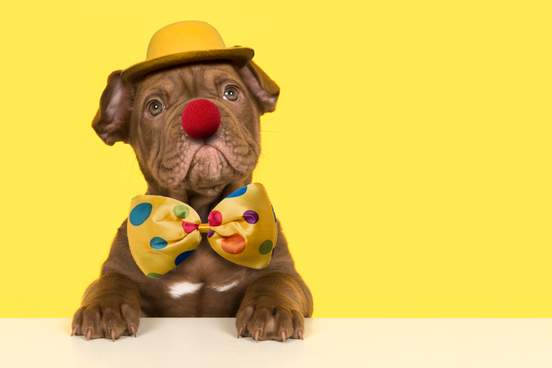
Definition: a buffoon
In Moira’s words: “How mercurial is life? We all imagine being carried from the ashes by the Goddess Artemis and here I get a balatron from Barnum and Bailey.”
While some of the words on this list, though rare, are more or less still in regular use, balatron is a lexicographical deep cut; it appears in the second edition of Merriam-Webster’s unabridged dictionary, defined simply as “a buffoon,” but did not make the cut for the third edition. The OED defines balatron as “a buffoon, a contemptible fellow.” It has made only periodic appearances in print (and on television) since the late 17th century.
Every time you step on the cobblestones for an encierro, you put your life at risk. Anyone who discounts the peril is a self-important, arrogant balatron.
— Peter N. Milligan, Bulls Before Breakfast: Running with the Bulls and Celebrating Fiesta de San Fermín in Pamplona, Spain, 2015

Definition: dangerous
In Moira’s words: “Jocelyn, that sounds dangersome.”
The adjective suffix -some means “characterized by a (specified) thing, quality, state, or action,” and comprises part of many common words, from awesome and meddlesome to burdensome to troublesome. It’s also found in words like delightsome and dangersome that are used less often than their respective synonyms, delightful and dangerous.
Well, we swarmed along down the river road, just carrying on like wild-cats; and to make it more scary the dark was darking up, and the lightning beginning to wink and flitter, and the wind to shiver amongst the leaves. This was the most awful trouble and most dangersome I ever was in …
— Mark Twain, The Adventures of Huckleberry Finn, 1884

Mammae definition: mammary glands and their accessory parts
Callipygian definition: having shapely buttocks
In Moira’s words: “I should’ve appreciated those firm round mammae and callipygian ass while I had them.”
Not to overexplain the joke, but part of the humor of Moira’s use of mammae and callipygian (in addition to Catherine O’Hara’s delivery) comes from the fact that she chooses words found more often in medical/scientific (in the case of mammae) or highfalutin (in the case of callipygian) contexts, rather than their earthier counterparts. Mammae is the plural of mamma, which traces back to the Latin mamma meaning “breast, udder, mother.” Callipygian (which more often describes someone or something as having shapely buttocks but sometimes also the shapely buttocks themselves) comes from the Greek words for “beauty” and “buttocks” (pygē). The combining form of pyg- is found in many technical words, often too obscure to be found outside of specialized dictionaries, such as pygalgia (“pain in the buttocks”) and dasypygal (“having hairy buttocks”).
Beginning with Aristotle (384-322 BCE) in the fourth century BCE, Cetacea—whales, dolphins, and porpoises—were recognized as “mammals,” because they have hair, lungs, and suckle their young by means of mammae. Yet, Aristotle called them “fishes” and organized them below reptiles and amphibians because of their lack of legs—which latter observation proved incorrect since they possess forelimbs modified into flippers.
— Annalisa Berta, Natural History, 1 Oct. 2024Though he gained acclaim beginning in the 1930s with works like “The Fleet’s In!” (which also stirred controversy for its particularly callipygian depiction of American sailors engaging in debauchery), he painted just 135 canvases over the nearly eight-decade span of his career, sometimes only completing one a year.
— Jo Rodgers, The New York Times, 8 Feb. 2024

Definition: a usually tightly packed or disorderly crowd
In Moira’s words: “Is there a scrum? How many camera crews?”
Scrum, which can refer broadly to tightly packed crowd (as of reporters or paparazzi), has its origin in the sport of rugby: in its earliest use, the word refers to the process in rugby by which the ball is put into play, with forwards from each side coming together in a tight formation and struggling to gain possession of the ball (using their feet) after it’s been tossed in among them. Scrum is short for scrummage, which is synonymous with the rugby scrum and is also a verb: in a scrum, or scrummage, the players scrummage.
Scrummage itself is an alteration of scrimmage, which is used with both rugby and American football meanings. Neither game is for the faint of heart; that a word related to both could give us a term like scrum is no surprise. Scrimmage, though, didn’t start with sport. Its earliest meanings are “a minor battle” and “a confused fight.”
A mutual friend once caught sight of Sonya leaving a lunch meeting and described her as “like the president in The West Wing”: striding down the street, surrounded by a scrum of coworkers asking urgent questions that she answered decisively.
— Mary Mann, YAWN: Adventures in Boredom, 2017

Definition: a friendly conversation or chat
In Moira’s words: “Patrick was about to slip away with the signatures when I corralled him into a little lunchtime chin-wag.”
Chin-wag is an informal word for “chat” used mostly in British English. It can also be used as a verb. Its constituent elements are easy enough to understand—chin referring to the lower portion of the face and wag referring to an act of wagging up and down—but the sum is somehow greater than these parts.
‘I might pop back tomorrow,’ I thought to myself, thinking that the Church Tavern was pretty sound if you’re after a pint and a chin-wag.
— Ashley Preece, The Birmingham (England) Mail, 16 Aug. 2023
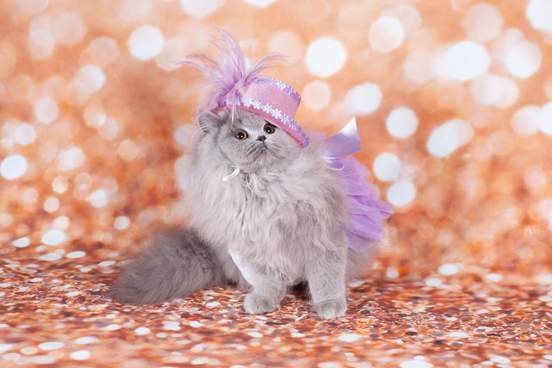
Definition: a frivolous or showy young woman (OED)
In Moira’s words: “Don’t start without me, you little frippet!”
The word frippet does not appear in our pages, but it did enter the OED in the early 1970s with the above definition and labeled as slang. Its etymological origin is unknown, though it does bear a resemblance to the noun frippery, which counts among its meanings “something showy, frivolous, or nonessential.” At least one source from the mid-20th century describes frippet as being similar in meaning to flapper, which we define as “a young woman of the period of World War I and the following decade who showed freedom from conventions (and in conduct),” though many examples of the word carry a disparaging (at least) tone.
“Why, you silly frippet, we’ve WON THE WAR!” Tudsbury’s eyes were bulging from his head, and his hands were shaking.
— Herman Wouk, War and Remembrance, 1950

Definition: a meal
In Moira’s words: “Okay ladies, if you don’t mind, I'm going to allow my husband to steal me away, for a modest repast across the avenue.”
If you haven’t noticed by now, Moira Rose chooses her words with flair, and repast is a word with a decidedly literary flair. It means, simply, “meal” (as well as, sometimes, the act of eating a meal or the time one eats a meal), but why not get fancy now and again? The Latin ancestor of repast, the verb pascere (“to feed”) shares even more ancient roots with fōda, the Old English word for “food.”
When I want to cook for someone I love, I turn to this volume first. Pull it off the shelf, and a photograph of a New England summer repast hints at what’s inside: a piece of broiled salmon with lemon and egg sauce spooned over the top, new potatoes tossed in butter and chopped parsley, shortcake with a cloud of soft, whipped cream floats on a generous pool of strawberries.
— Jeanne Hodesh, LitHub.com, 1 Oct. 2020

Definition: lack or extreme scarcity of males in a population (OED)
In Moira’s words: “Darling, I realize the pickings are slim in this rural spanandry, but you can’t ask Council to misuse public funds just so you can find yourself a new boy toy.”
Spanandry is another lexicographical deep cut, one not recorded in our dictionaries but defined in the OED as a zoological term borrowed in the early 20th century from the French spanandrie. Mayhaps Moira Rose studied zoology before (or whilst) taking up acting?
Spanandry in pinworms appears to be based on the ability of isolated haplodiploid females to colonize habitats by mating and producing female progeny with their parthenogenically produced sons.
— Martin L. Adamson, Advances in Parasitology, Vol. 28 (1989)
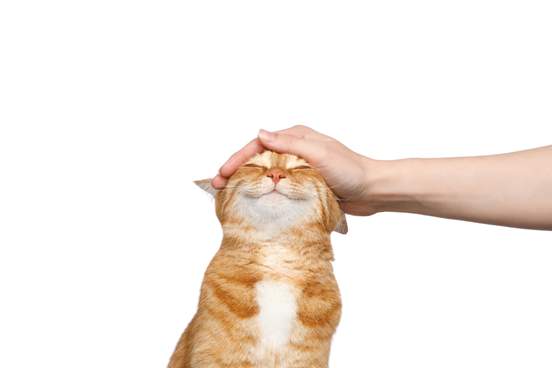
In Moira’s words: “Grace! Our timorous grinagog.”
Timorous definition: of a timid or fearful disposition
Grinagog definition: a habitual grinner
Timorous, by far the more common word in this lovely Moira Rose twofer, is related—as you may have guessed—to timid. Both words ultimately come from the Latin verb timēre, meaning “to fear.” Timid may be used more often, but timorous is older. It first appeared in English in the mid-15th century; timid came on the scene a century later. Both words can mean “easily frightened” (as in “a timid mouse” or “a timorous child”) as well as “indicating or characterized by fear” (as in “he gave a timid smile” or “she took a timorous step forward”).
Grinagog is another word that was included in the second, but not third, edition of our unabridged dictionary. There it is labeled as both dialectical and slang.
“You like that stuff?” they would ask. “How? It’s so fake!” … But to timorous, scrawny, six-year-old me, wrestling was the ultimate outlet, a world where I could be strong and fearless, where I could let my bottled-up anger loose and still not hurt anyone because it was all done with a wink and a nod.
— Brad Balukjian, The Six Pack: On the Open Road in Search of Wrestlemania, 2024Little English children … especially if they be bred in Norfolk, are told that “she” is the “cat’s aunt;” while a foolish boy who grins and stammers instead of answering promptly is called—Oh! the stinging reproach!—the “cat’s uncle.” There is even a name to denote this feline sanguinity,—Grinagog, which sounds like the very embodiment of contempt.
— Agnes Repplier, The Fireside Sphinx, 1902