Illustration of eclipse
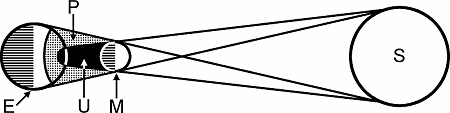
- E earth
- M moon in solar eclipse
- P penumbra
- S sun
- U umbra
 Jeffrey Steele,
Forbes.com,
29 June 2026
The people-watching nearly eclipses watching the games.
—
Fort Worth Star-Telegram,
26 June 2026
Maureen Groppe,
USA Today,
30 June 2026
Musk is the richest man in the world – with his net worth eclipsing $1 trillion after the SpaceX IPO – and people want a piece of that track record of success.
—
John Towfighi,
CNN Money,
30 June 2026
See All Example Sentences for eclipse
Jeffrey Steele,
Forbes.com,
29 June 2026
The people-watching nearly eclipses watching the games.
—
Fort Worth Star-Telegram,
26 June 2026
Maureen Groppe,
USA Today,
30 June 2026
Musk is the richest man in the world – with his net worth eclipsing $1 trillion after the SpaceX IPO – and people want a piece of that track record of success.
—
John Towfighi,
CNN Money,
30 June 2026
See All Example Sentences for eclipse
“Eclipse.” Merriam-Webster.com Dictionary, Merriam-Webster, https://www.merriam-webster.com/dictionary/eclipse. Accessed 5 Jul. 2026.
eclipse
1 of 2 nouneclipse
2 of 2 verb Copy Citation